
.webp)
Direct Hair Implantation (DHI)
Direct Hair Implantation (DHI)
With Choi Implanter Pen
Is an advanced hair restoration technique derived from the Follicular Unit Extraction (FUE) method. It uses a specialized tool called a Choi Implanter Pen to extract and implant hair follicles directly into the scalp without the need to pre-create recipient sites (incisions). This makes it a minimally invasive and precise method, offering natural results with faster recovery.
For those considering DHI, Turkey has become a premier destination for hair transplantation, offering world-class clinics, internationally accredited surgeons, and cutting-edge technology at a fraction of the cost compared to Western countries. In addition, Turkey combines exceptional medical care with rich cultural experiences, making it the perfect choice for medical tourism.
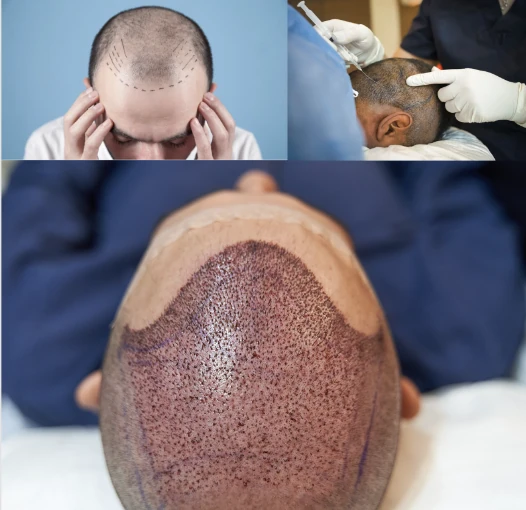
Choi Implanter Pen: A specialized tool allows simultaneous channel creation and follicle implantation, ensuring precision and minimizing trauma.
No Pre-Made Incisions: Implantation is done directly, eliminating the need for pre-cut channels and reducing scarring.
High Density: DHI enables implantation of hair follicles at a higher density, creating a more natural and fuller look.
Custom Angles: Follicles are placed at specific angles and directions for a realistic hairline and growth pattern.
Minimally Invasive: The procedure involves less bleeding, swelling, and scarring compared to other techniques.
Shorter Recovery Time: Healing is faster due to the precise and less invasive nature of the procedure.
Natural Results: The precision of the technique results in a seamless, natural-looking outcome.
Hair Follicle Survival Rate: Higher survival rates are achieved because the follicles spend less time outside the scalp during the procedure.
Suitable for Different Areas: DHI can be used for scalp, beard, and eyebrow transplantation with excellent results.
Advanced Technology: DHI utilizes state-of-the-art tools and methods, making it a preferred choice for patients seeking top-tier results.
The Healing Process
Symptoms: Minor redness, swelling, and scabbing in the donor and recipient areas. These symptoms are less pronounced in DHI due to fewer incisions.
Care: Avoid touching or washing the scalp. Use any prescribed medications like antibiotics or anti-inflammatories to prevent infection.
Initial 1–3 Days
Scabbing: Tiny scabs form around the implanted follicles. These will naturally fall off as the scalp begins to heal.
Hair Shedding: Some transplanted hairs may start to shed, which is normal and part of the process (called "shock loss").
Care: Gentle washing can begin with special shampoos recommended by the clinic. Avoid scratching the scalp.
Days 3–7
Redness & Irritation: By the second week, redness and irritation in the recipient area typically subside.
Shedding Continues: Most transplanted hairs shed during this period, leaving behind the implanted follicles.
Care: Follow the surgeon’s advice on hair products and maintain a healthy scalp.
Weeks 2–4
Dormant Phase: Implanted follicles enter a resting phase, and there is minimal visible hair growth.
Care: Continue good scalp hygiene and avoid activities that could stress the scalp (e.g., vigorous exercise).
Months 1–3
Hair Growth Begins: Transplanted hairs start growing, typically fine at first, then thickening over time.
Care: Ensure proper nutrition and avoid excessive styling or chemical treatments on new hair.
Months 4–6
Full Results: The final results are visible after 12–18 months when the hair has fully grown and matured.
12 Months and Beyond